Could a new generation of mobile businesses bring life back to our streets?
For a recent project, I've been exploring the role of informal outdoor commerce in shaping public spaces, active cities and everyday street life. The subject came up recently when my mum and an old friend from Singapore were reminiscing about street life in the 1970s. They recalled an extraordinary entrepreneurial culture, where seemingly anything could be a mobile business. Food, drinks, household goods and services were brought directly to where people were.
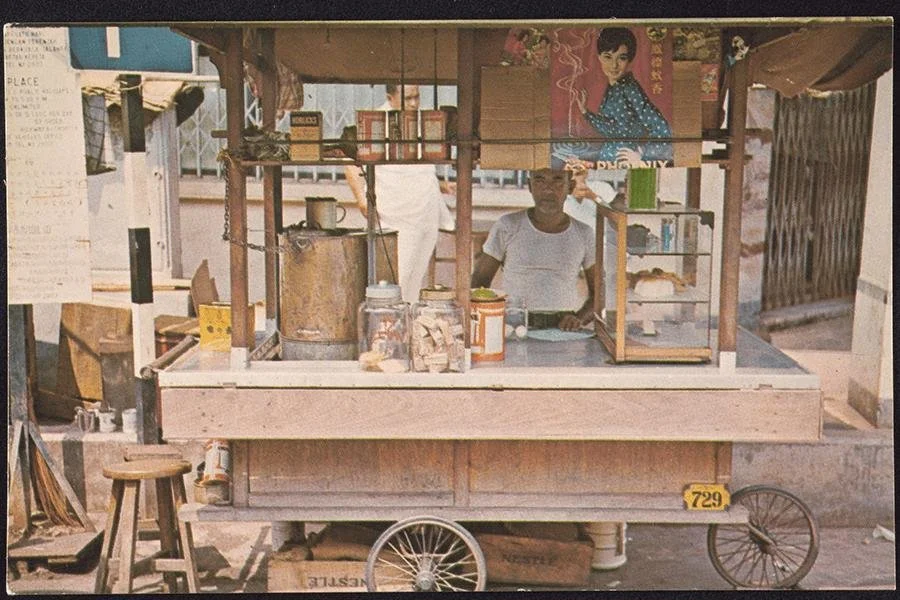
Food stall, Singapore, 1973–74. Rainer Halama · CC BY-SA 4.0These businesses were often wonderfully ingenious. Operating from bicycles, pushcarts and improvised stalls, they made use of limited space, materials and capital. They were adaptable, resourceful and woven into the rhythms of everyday life. It got me wondering: in an age when almost anything can be delivered to our front doors, is there still a place for businesses that bring us out onto the street?
Past — The disappearing street?
Singapore's culture of mobile enterprise stretches back much further than living memory. Writing about Singapore in the 1860s, author John Cameron marvelled at its extraordinary street life:
"There is probably no city in the world with such a motley crowd of itinerant vendors of wares, fruits, cakes, vegetables…"
He described travelling kitchens carried on shoulder poles, with cooking equipment on one side and ingredients on the other. An entire mobile restaurant, ingeniously designed to move through the city.
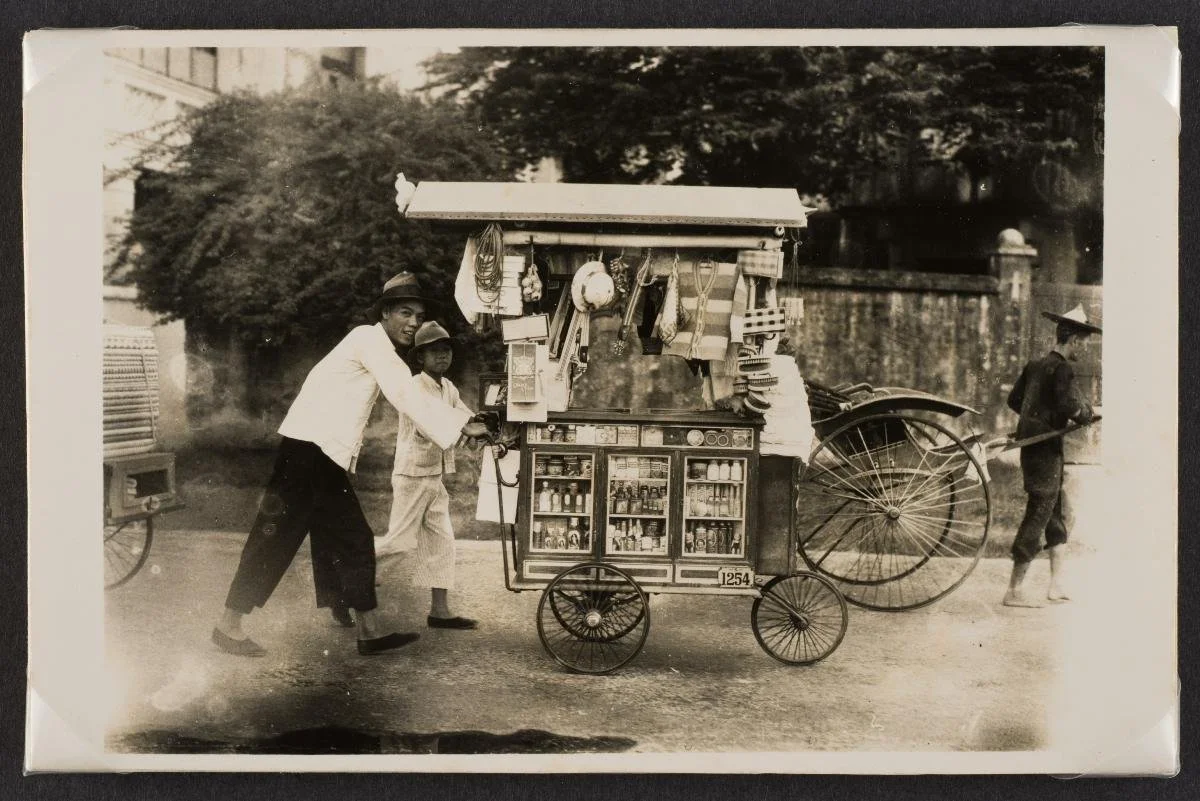
Fruit seller, circa 1900. Public domain. G. R. Lambert & Co. Leiden University Library / KITLVMore than 160 years later, the resourcefulness of these tiny businesses feels remarkably contemporary. But these businesses didn't flourish by accident. Singapore's dense, mixed-use neighbourhoods brought people and commerce into close proximity. Its distinctive five-foot ways — sheltered walkways running beneath rows of shophouses — offered protection from the tropical sun and rain, while providing access to a steady flow of pedestrians.
For newly arrived immigrants with limited resources and few employment opportunities, a basket, shoulder pole or pushcart could offer a livelihood without the expense of a permanent shopfront. And in a time before modern household conveniences became widespread, neighbourhood vendors also provided an accessible source of everyday food, goods and services.
The city itself created the conditions for mobile enterprise to flourish.
Yet as Singapore modernised, the relationship between commerce and the street began to change. Between the 1970s and 1980s, thousands of itinerant hawkers were relocated into purpose-built hawker centres. The transformation brought significant improvements in hygiene, infrastructure and working conditions, while preserving an extraordinary culinary culture.
Today, Singapore's hawker centres remain vital community gathering places. But where businesses once moved through neighbourhoods, they increasingly occupy fixed locations. And while markets can become wonderful social destinations, I wonder what happens to the more spontaneous encounters that take place along the way.
Elsewhere, street commerce continues to play a very visible role in everyday urban life, although cities have taken very different approaches to accommodating it.
In Mexico, tamaleros sell tamales and camoteros announce their sweet potatoes with distinctive whistles. In Colombia, tinteros bring coffee to the streets. India's chaiwallahs serve tea from carts and stalls, while pheriwalas travel through neighbourhoods selling everyday goods. In Accra, Ghana, hawkers weave through busy streets carrying food, drinks and household essentials.
And in Fukuoka, Japan, traditional yatai — tiny food stalls assembled along city streets each evening — offer another model. When their numbers began to decline, the city introduced a regulatory framework in 2013 that explicitly recognised their contribution to urban vibrancy and social interaction, while establishing rules around hygiene, accessibility and public space.
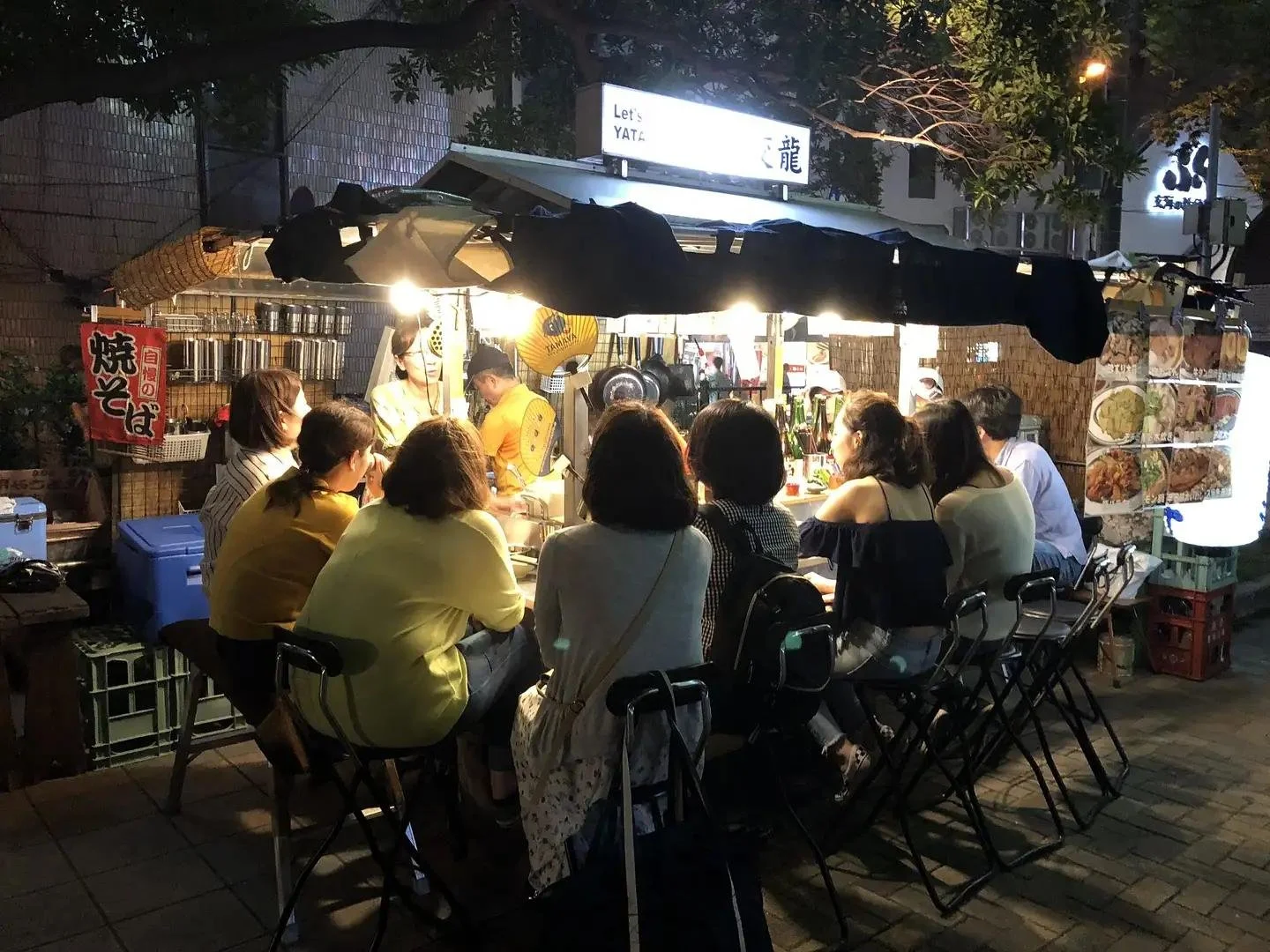
Fukuoka's yatai today. Hirho · CC BY-SA 4.0These are very different traditions, but they share something important: commerce isn't simply happening in public space. It's helping to create public life. Their calls, whistles, familiar faces and daily routines become part of the sensory and social fabric of a neighbourhood.
They also reveal the delicate balance cities must navigate between supporting livelihoods, maintaining accessible streets and preserving the informal encounters that give neighbourhoods their character.
What do cities gain when commerce becomes more organised? And what might they lose?
Present — The new mobile entrepreneur
Interestingly, just as so much of our consumption moves online, new technologies are making physical mobile commerce possible in different ways. Electric cargo bikes, digital payments, social media and lightweight modular equipment are changing how small businesses can operate. And there are already some wonderful examples.
In Bangkok, Move.coffee began when a young barista transformed her Vespa and sidecar into a tiny coffee shop, avoiding the expense of a permanent café. In Vancouver, Scavenger Coffee takes a similarly resourceful approach, serving coffee from bicycle-towed carts built using reclaimed materials. In Graz, Austria, DieFahrBar turns a cargo bike into a compact mobile coffee bar, bringing refreshments and opportunities to gather directly onto the street. Meanwhile, in Gentofte, Denmark, the local library uses a cargo bike to take books, storytelling and puppet theatre into neighbourhood spaces.
In Copenhagen, Cykelkokken takes the concept even further, creating a travelling restaurant experience that brings food, people and conviviality into unexpected urban spaces.
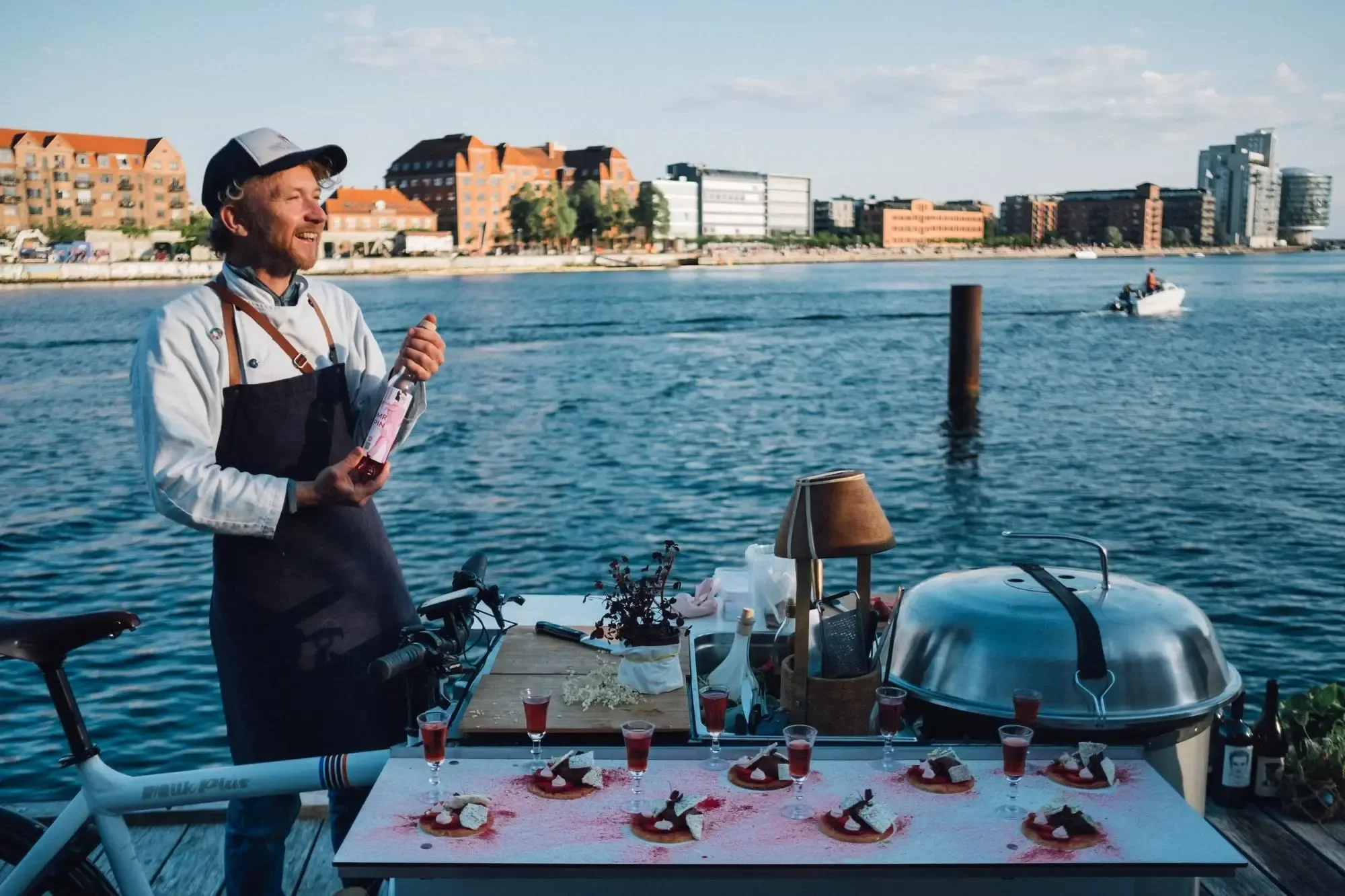
Cykelkokken. Copenhagen, Denmark.
Different cities, different approaches, but the same entrepreneurial ingenuity: small, adaptable businesses that bring people together wherever they stop.
Of course, operating a mobile business comes with its own challenges, from storage and maintenance to permits, weather and limited capacity. But the possibility of starting small, without committing to a permanent retail space, is compelling.
These aren't entirely new ideas. In many ways, they're contemporary interpretations of businesses that have existed for generations. But the combination of electric mobility, digital connectivity and modular design raises an interesting possibility: Are the conditions coming together again for a new era of mobile micro-entrepreneurship?
Looking back at Singapore's hawkers, what strikes me is how closely their businesses were shaped by the economic, spatial and technological conditions of their time. And I wonder whether we're beginning to see a new convergence of conditions today.
Across parts of Europe, cities are reclaiming space from cars and experimenting with more walkable, mixed-use neighbourhoods. Ideas such as the 15-minute city are encouraging us to rethink how everyday services, work and social life might exist closer to home.
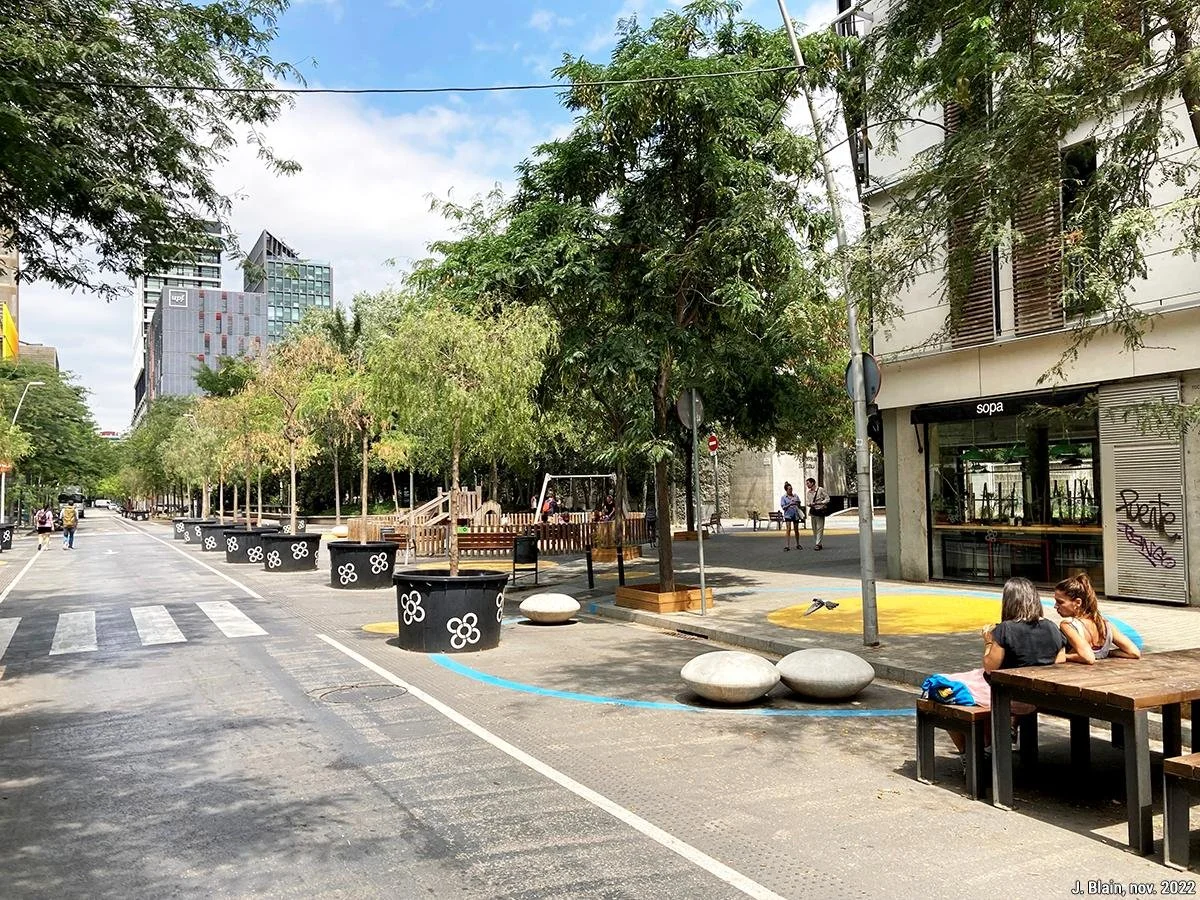
Barcelona's Superblocks take back streets from cars, R. Hauschulz · 2024. CC BY-SA 4.0Meanwhile, high commercial rents and changing patterns of employment are making conventional retail less accessible to some would-be entrepreneurs. At the same time, electric cargo bikes, portable equipment, digital payments and social media are making it possible to operate increasingly sophisticated businesses from remarkably small footprints.
There are some interesting parallels with the past.
Where dense shophouse neighbourhoods once brought customers and vendors together, walkable neighbourhoods could provide new opportunities for mobile commerce. Where a shoulder pole or pushcart once offered an affordable way to start trading, electric cargo bikes and modular equipment could provide a contemporary alternative. And where hawkers once relied on passing footfall and familiar neighbourhood relationships, today's mobile entrepreneurs can combine physical presence with digital networks to find and build their communities.
Of course, the motivations have changed. We no longer depend on itinerant vendors in quite the same way for everyday necessities. But perhaps their value today could lie in something else: convenience, local character, human interaction and the simple pleasure of encountering something unexpected on the street.
Perhaps the conditions that once made mobile commerce a necessity are re-emerging as conditions that could make it an opportunity. Not a return to the street hawkers of the past, but a contemporary reinvention of the same entrepreneurial ingenuity.
Future — Making room for doorstep commerce
Street commerce does more than facilitate transactions. A coffee cart makes you want to stop and hang around. A familiar vendor can become a neighbourhood fixture. A small gathering around a food stall can turn an otherwise anonymous stretch of pavement into somewhere people linger, meet and interact.
Urban designer Jan Gehl has long argued for the importance of optional and social activities in public space — the things we choose to do when an environment invites us to stay, rather than simply pass through. And contemporary research into informal street vending, including work by Nastaran Peimani and Hesam Kamalipour, highlights how these activities are intertwined with pedestrian movement, the built environment and the everyday functioning of cities.
It raises an interesting distinction: creating streets that are pleasant to walk through isn't necessarily the same as creating streets where people have reasons to stay. A pedestrianised street can still feel surprisingly empty. Perhaps small, mobile businesses could provide some of those reasons to linger, without requiring permanent construction or conventional retail units.
Of course, informal commerce also presents challenges. Accessibility, sanitation, fair working conditions and competing uses of public space all matter. Formalisation has brought genuine benefits, and mobility alone doesn't guarantee a better public realm. But perhaps the opportunity isn't to choose between informal street vending and permanent marketplaces.
What if cities could accommodate something in between?
Imagine neighbourhoods with flexible vending pitches, shared water and power, affordable permits and streets designed to accommodate both movement and moments of pause. Rather than treating mobile businesses as temporary obstructions or occasional attractions, what if we recognised their potential as part of a city's everyday social infrastructure, like Fukuoka has? If we're already redesigning streets to prioritise people over cars, perhaps we should also be thinking about the kinds of small businesses that could help bring those streets to life.
A little more life on the street
It leaves me with a question: As cities become more walkable and a new generation of lightweight, digitally connected businesses emerges, could mobile commerce help bring everyday social and commercial activity back into public space?
I don't know the answer. But I love the possibility that something as humble as a bicycle, a cart or a little roadside stall could help us rethink how our streets are used. It's an area we'll be keeping an eye on at Vital Agents, particularly as cities rethink their public spaces and new technologies make small-scale, mobile enterprise possible in different ways.
Further reading
John Cameron (1865) — Our Tropical Possessions in Malayan India. Historical observations of Singapore's itinerant vendors.
Singapore National Library Board — Give Me Shelter: The Five-footway Story. How architecture, migration and entrepreneurship shaped Singapore's street life.
Singapore National Heritage Board — Hawker Culture. The history and material culture of Singapore's hawkers.
Fukuoka City — Yatai policy and licensing. How the city supports its street-stall culture.
European Commission — Large-scale Introduction of Cargo Bikes. Cargo bikes in urban mobility and commerce.
Jan Gehl (1971) — Life Between Buildings: Using Public Space. Foundational thinking on public life and social activity.
Peimani & Kamalipour (2022) — Informal Street Vending: A Systematic Review. Research into street vending, urban space and policy.
Amankwaa & Mensah (2025) — Red means go inside, green means come outside. Research exploring how street hawkers in Accra, Ghana, navigate urban space, movement and the everyday rhythms of the city.
