Is Scrolling the New Smoking?
The growing movement toward screen-free spaces and the soft infrastructure needed around them.

Schools have become the focal point for phone-free policy, especially with the recent news about phone bans across schools in the UK. There is something extremely contradictory about designing screen-free spaces for children while the adults around them remain glued to their phones. The most powerful argument for phone-free spaces may be the modelling one: people (including children) will not normalise putting the phone down in a world where everyone else does not.
A lot of the conversation about screen time management happens at the level of personal behaviour. Use a screen time app like Opal. Block yourself out with a Brick. Buy a dumb phone. The responsibility is placed on the individual, and the tools are self-managed. But there is a growing movement to design disconnection into places themselves and to make the screen-free experience not a personal decision but an environmental, collective one.

Examples abound:
🍽️ Cafes, restaurants and clubs have long posted handwritten "No Laptops" on tables, they are starting to do the same with phones.
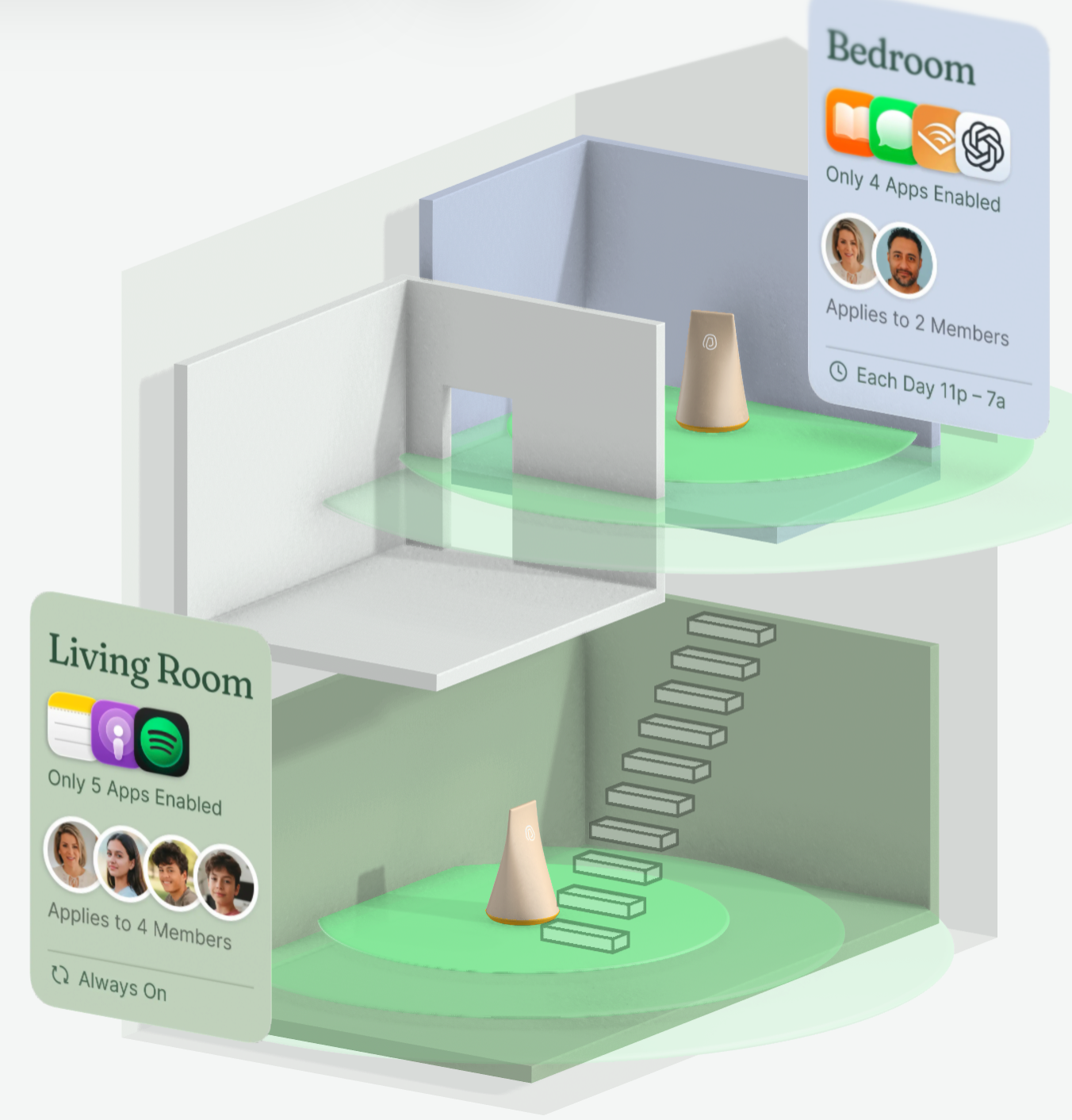
🏠 Analog "beacons" let families create shared phone boundaries in their homes.
💪 Fitness First has just partnered with Kip, which makes tags that disable selected apps when users can (voluntarily) tap their phones against them. Other gyms, like Foundry, have discouraged phones completely.
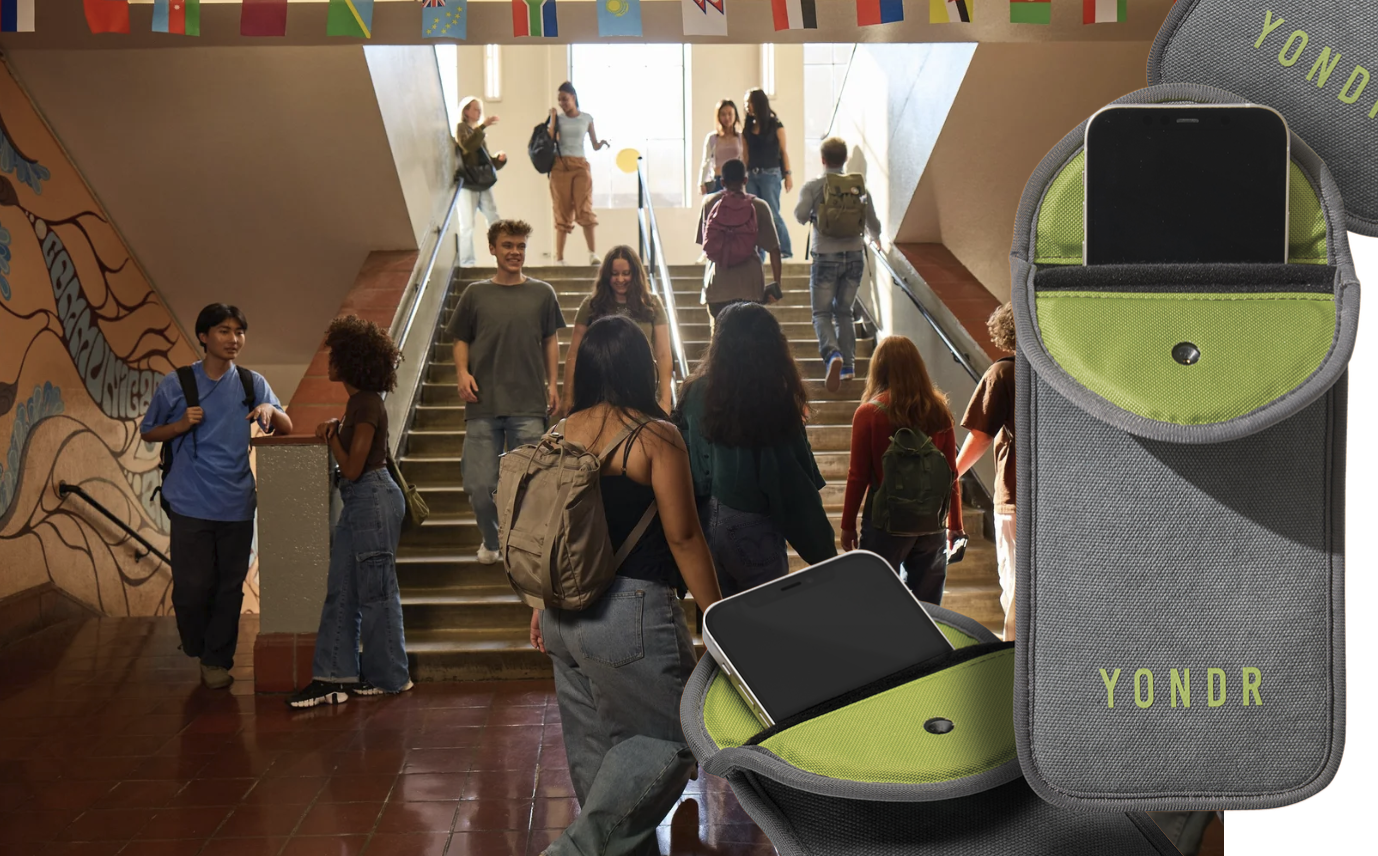
🏫 Schools now have various ways of ensuring phone-free spaces, from mandated pouches, to collections at the gate.
🛝 A screen-free playground just opened in Denmark, encouraging parents to be more present.
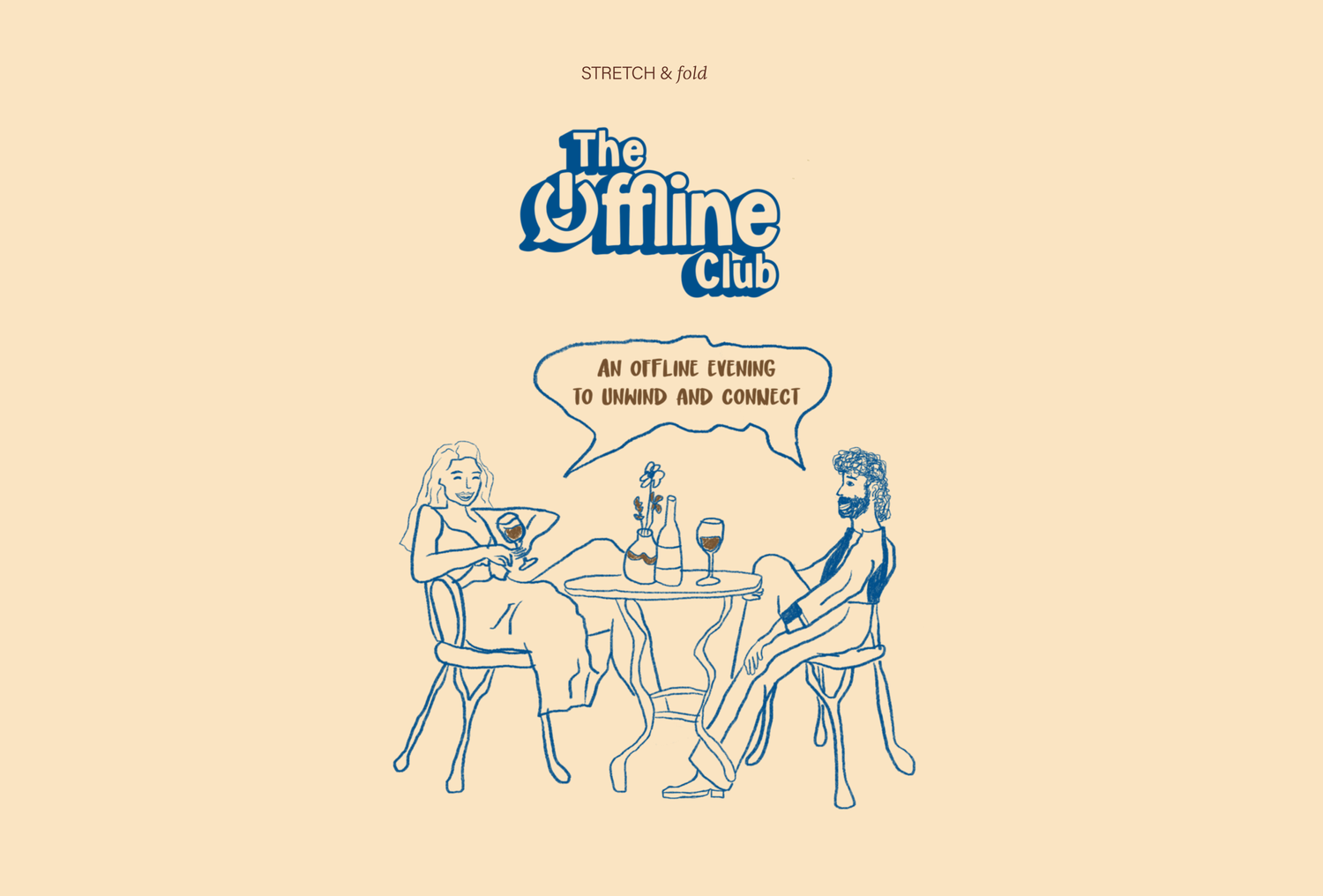
💬 Eventbrite quite rightly celebrated that phone-free events grew 567% globally in 2025. The Offline Club, which started as a single café evening in Amsterdam, now has 600,000 followers and runs phone-free events across 20 European cities.
🌳 Unplugged, a UK cabin rental company, has built an entire hospitality model around the moment of handing your phone over on arrival: you receive a Nokia with Snake, an instant camera, and a paper map in return.
🧑🧑🧒🧒 Vadgaon, a village of 3,000 in Maharashtra, India, has collectively decided that a siren sounds every evening at 7pm, when phones and TVs go off across the village. Seine-Port, a village in the South of France has voted to restrict the use of smart-phones in public. And in St. Albans in the UK over 30 primary schools united to ask parents not to give their children full internet-access smartphones until they reach Year 9 (age 14).
The demand seems to be growing, and product designers, event organisers, leisure and hospitality providers and entire villages are responding. But in designing a smartphone/scroll-free space or place, there aren't one size fits all approaches.
(Note: we have excluded places like cars, construction sites etc., where the case for restriction is hazard-based and largely settled. The spaces here are more contested, and more recent.)
A Framework for Scroll-Free Spaces
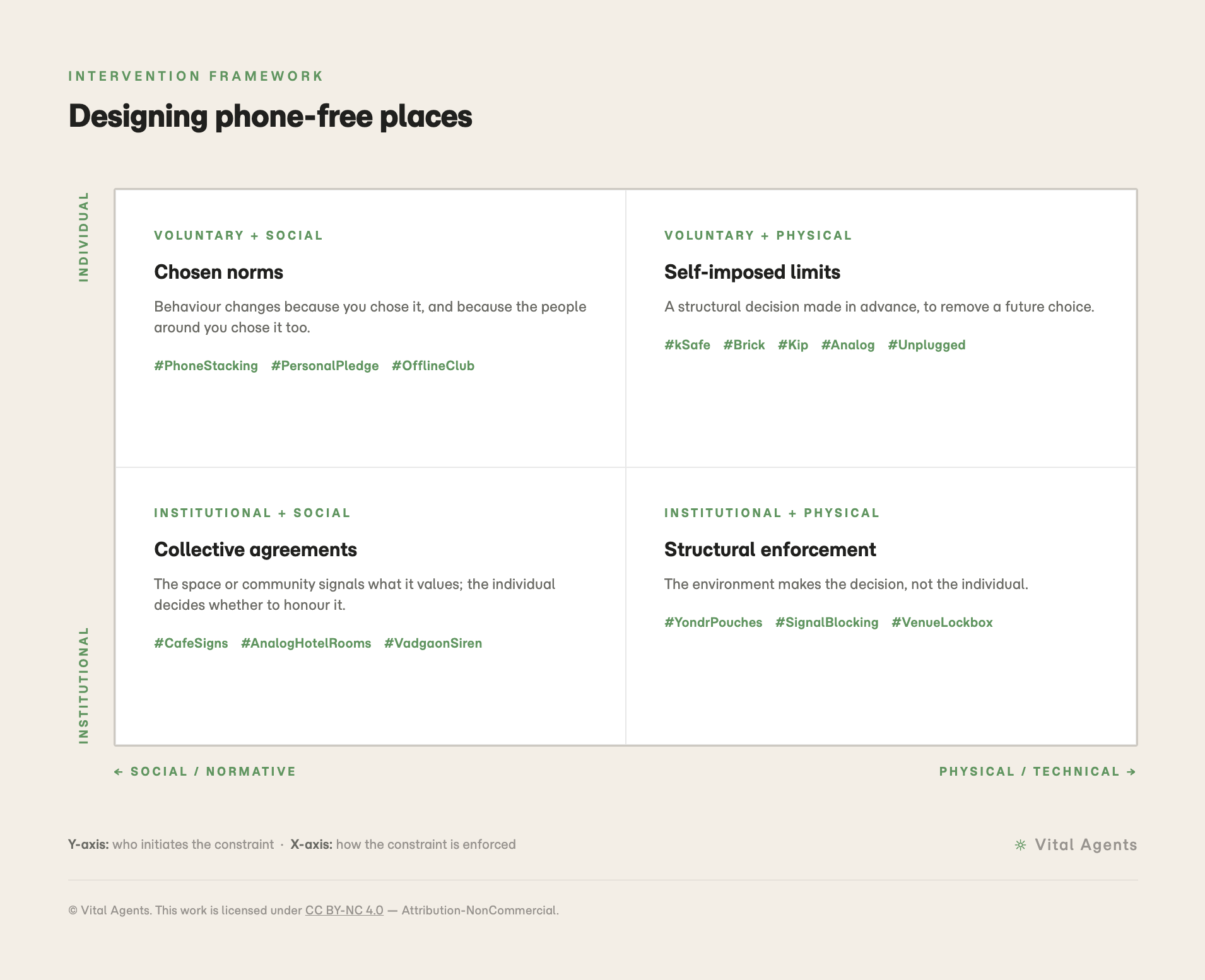
There are two separate questions in play when designing smartphone-free spaces: what kind of constraint is it, and whose decision is it?
If we map those two axes, a useful picture emerges.
On one axis are social and normative interventions: signs, shared rituals, ‘quiet zone-like’ etiquette, the phone stacking game at a restaurant table (phones go face-down in the middle; first to pick up pays the bill). These rely on a person choosing to comply.
On the other are physical and technical interventions: locked pouches, timed containers, signal blocking, hardware that removes the option structurally. Rather than ask, they enforce.
On the second axis: who initiates the constraint? In some cases it is the individual. Someone installs Brick, Kip, or Analog in their own home, locks their phone in a kSafe before bed, books a cabin at Unplugged.
In others, it is the institution: a school mandates Yondr pouches, a community agrees by vote to disconnect every evening, a venue builds signal blocking into the room.
This creates four different design territories. The most effective interventions tend to sit in that last quadrant. They are also the most contested.
A contested landscape
This debate has a precedent.
When smoking bans arrived in restaurants and public spaces, the counterargument was the same: personal freedom, individual agency, the right to make your own choices without institutional interference. What shifted it was the reframe from individual choice to collective harm. Secondhand smoke wasn't just your problem; it was everyone's air.

The parallel isn’t perfect. There are many things you can do with a smartphone, many of which are perfectly healthy. The harms are less direct and harder to measure. There is no chest X-ray for excessive screen time. But the collective harm argument is forming. "Phubbing" research shows that a phone visible on a table measurably reduces conversation quality for everyone sitting at it, not just its owner. It is not just your attention, it is everyone's. Phone restrictions are based on similar arguments: one person’s distraction affects the attention of the entire table or room.
What the smoking parallel also shows is that these things resolve plurally, and depend heavily on culture and shared values. For smoking, we saw full bans where stakes are highest, designated zones elsewhere, voluntary norms and product innovation in between. Decades later we see a massive shift. Cigarette companies still sell cigarettes, but smoking in a restaurant is now the anomaly in many countries.
Phone and social media-free spaces are the anomaly today. What might the future look like?
Designing smartphone-free spaces
In designing smartphone-free spaces, the tools are the easier part. The harder work is the soft infrastructure around them: the understanding of whose needs are core; what is lost when we take a screen away vs. what is gained; the communication that frames the restriction as care rather than control; the acknowledgement that a phone is often filling a social function — connection, safety, comfort — that the space itself might be better placed to meet.
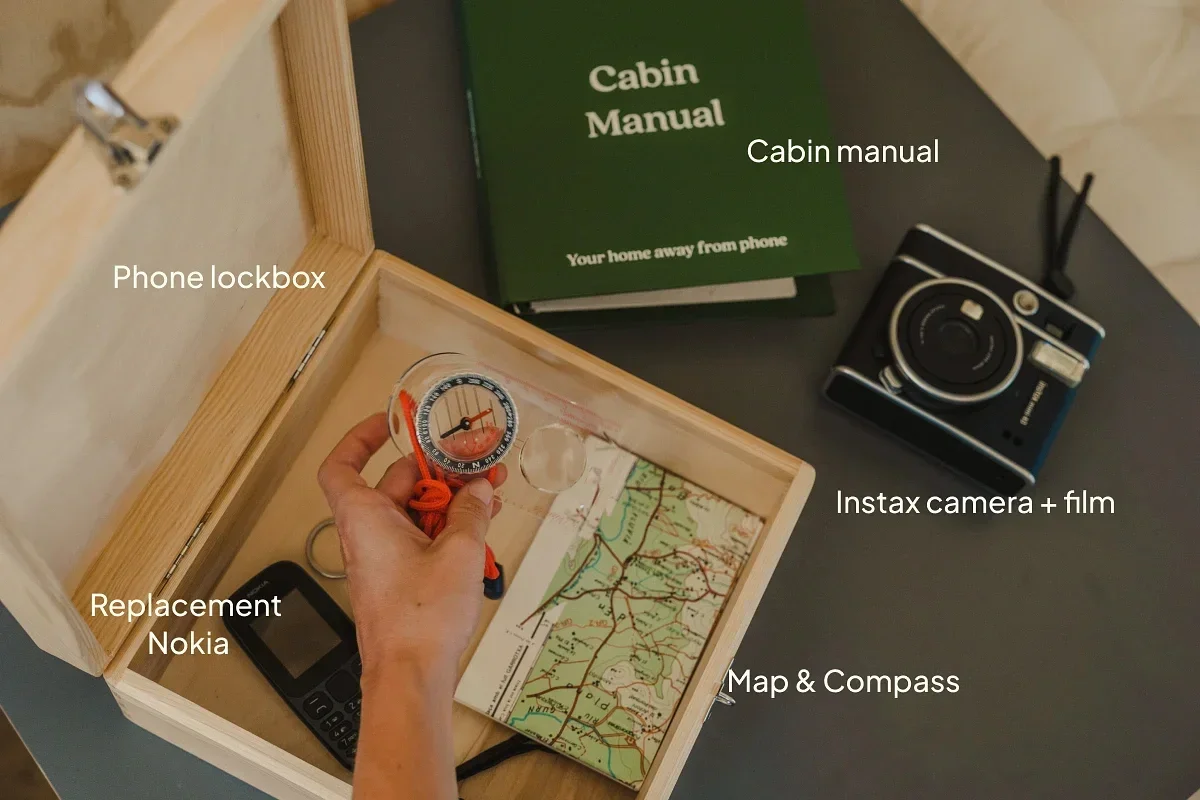
Unplugged is a great example of this done well, though they are dealing with a very willing, well-off audience. The Nokia phone and instant camera you get when you lock your smartphone away is a designed moment of transition that signals what the experience is for, and makes the act of handing over the phone feel like receiving something rather than losing it. It also shows they have understood their audience. Emergency calls? Photos for memories? Games and books in case you feel bored? They have thought of all the things that make people anxious about giving up their phone.
Removing screens is only half the brief. The other half is what the space offers in their place.
Sources & References
Research
Przybylski, A. K. & Weinstein, N. (2013). Can you connect with me now? How the presence of mobile communication technology influences face-to-face conversation quality. Journal of Social and Personal Relationships.journals.sagepub.com
Misra, S., Cheng, L., Genevie, J. & Yuan, M. (2016). The iPhone Effect: The Quality of In-Person Social Interactions in the Presence of Mobile Devices. Environment and Behavior.journals.sagepub.com
Data & reports
Eventbrite (2026). Offline by Design: The Rise of Phone-Free Experiences. eventbrite.com
Creating mobile-phone free Environments: UK Department of Education. gov.uk
Initiatives
The Offline Club: theoffline-club.com
Vadgaon digital detox initiative, Maharashtra: voanews.com
Seine-Port bans scrolling in public: theguardian.com
Unplugged: unplugged.rest
Products
Yondr: locking phone pouches for schools and events — overyondr.com
kSafe (Kitchen Safe): timed lock container — thekitchensafe.com
Brick: NFC-based phone blocker — getbrick.com
Kip: screen time disconnect tag — kip.life
Analog: home Beacon that creates automatic phone-free zones — goanalog.co
