The School Run Redesign
Cars are ruining the school run. And what design can do about it.
Across the developed world, active travel to school has been in long, steady decline. In the United Kingdom, just 47% of primary school children now walk to school, and fewer than 2% cycle, compared to the 1970s, when most children travelled independently as a norm.¹ In the United States, the share of children walking or cycling to school dropped from 48% in 1969 to around 10–15% today.² Similar trends hold across Australia, Canada, and much of Western Europe (though there are some notable exceptions if you keep reading).
The consequences add up. One in three children in England does not meet the recommended minimum of sixty minutes of physical activity per day.³ Sedentary childhood is associated with poorer cardiovascular health, lower concentration, and weaker mental health outcomes, all of which accumulate over time. And yet, in the UK the school run itself accounts for roughly one in five cars on urban roads during peak morning hours, contributing directly to the congestion that makes those streets feel so hostile in the first place.⁴
What should be a walkable journey often does not feel like one
We recently moved to the Lisbon metropolitan region. One of the biggest factors in choosing where to live was proximity to school. We ended up fifteen minutes on foot from the gates, and that walk has become one of my favourite parts of the day. I get to stretch my legs before hours at a desk. My daughter toddles, chats, points at things. We wave at shop owners, neighbours, the resident cats and dogs. It is a small ritual that refreshes both of us before the day begins.
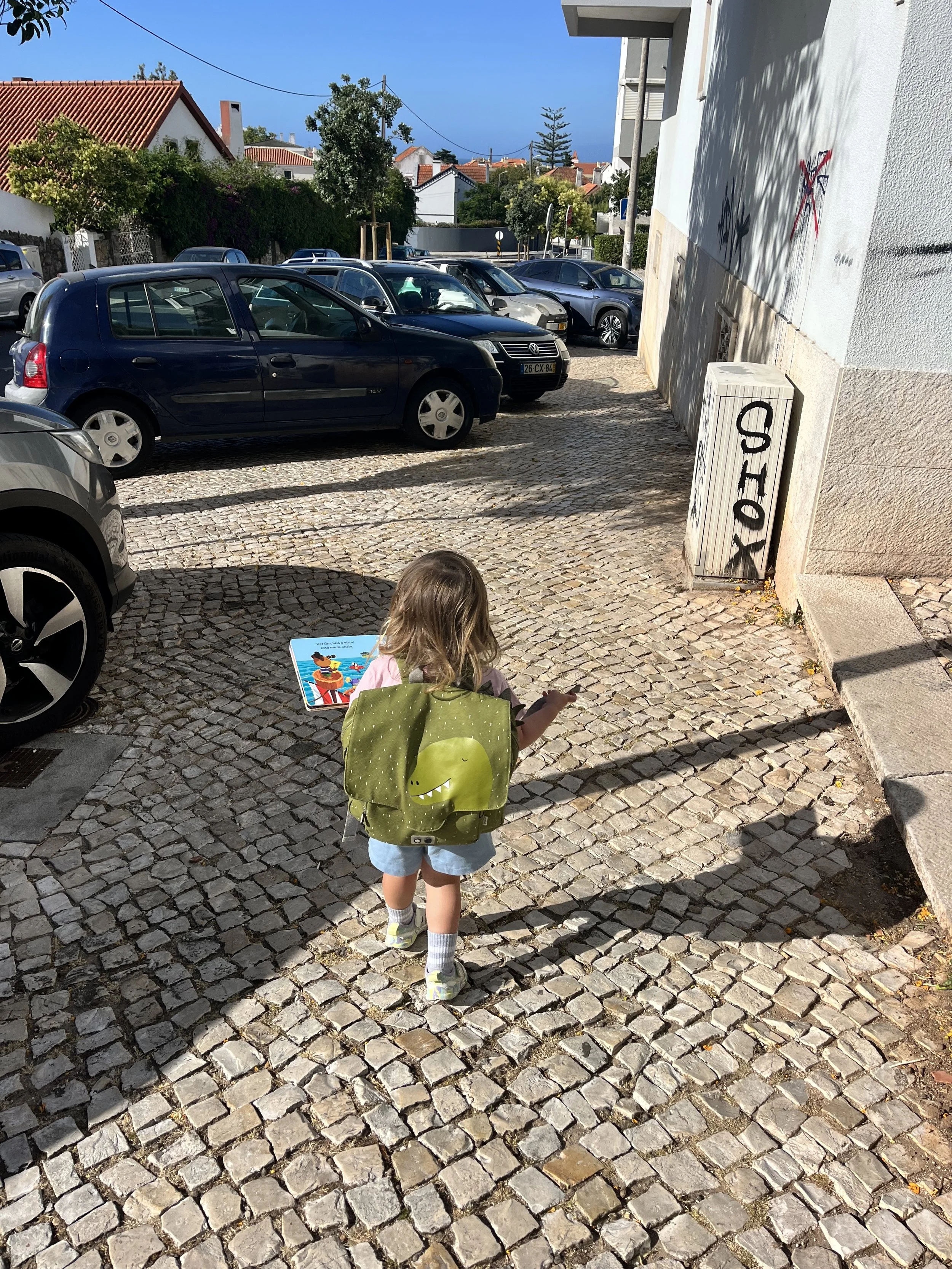
So I was genuinely surprised to find that in an area that looks walkable on paper (i.e. decent density, good public transport, beautiful cobbled footpaths) the vast majority of children arrive by car. A few days of observation and experience started to explain it. Cars travel at scary speeds. Zebra crossings are routinely ignored. Footpaths appear and disappear without logic, or are blocked entirely by parked vehicles.
Sadly, this is the situation for many kids and parents around the world.
You are not stuck in traffic, you are the traffic
The reasons families choose the car are often completely legitimate, and a bit of a tangle. For some it's distance; not every child lives within walking range, and this has become more of an issue as schools consolidate and move to urban fringes, as has happened especially in the U.S. and Australia. For others it's safety, real or perceived: the speed of traffic, missing or dangerous crossings, the footpath or cycle path that disappears or does not exist at all. For many it comes down to the practicalities of a busy morning: multiple kids, multiple schools, bad weather, the accumulation of habit and convenience. Often it's all of these at once.
But there is a catch-22. The more children who are driven, the more traffic there is. The more traffic there is, the more dangerous and unpleasant those streets become. Which makes more parents drive. I always loved the saying, “you are not stuck in traffic, you are the traffic”. Similarly, every car joining the school run is simultaneously a response to the problem and a contribution to it.
This is a design problem first. And countermovements are building. Cities, parents, communities, brands and designers are pushing back from multiple directions.
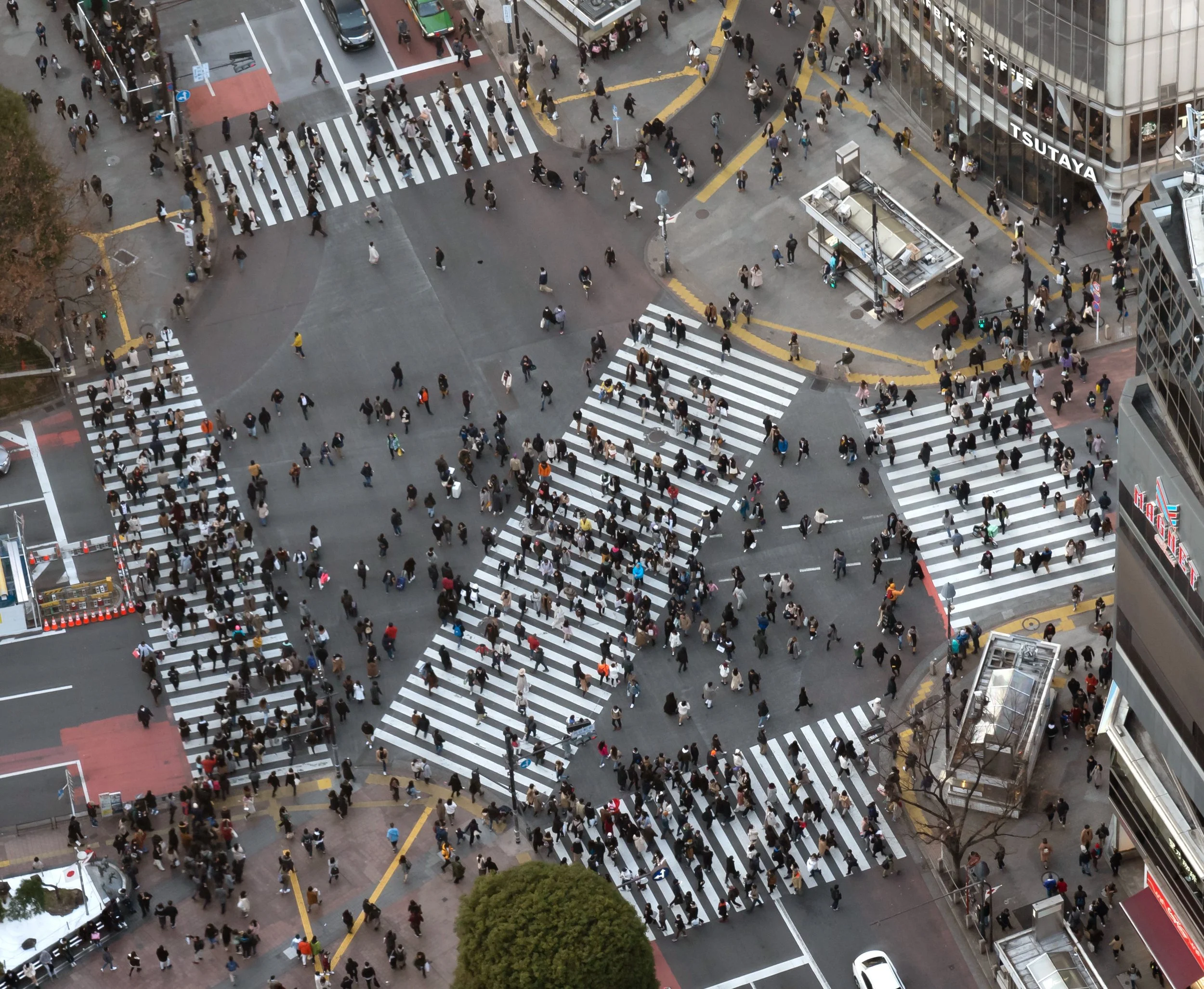
The Shibuya scramble from above. Source
Urban design: The pedestrian scramble (Barnes Dance)
In the late 1940s, a traffic engineer named Henry Barnes was watching his daughter navigate busy intersections on her way to school. In response, he became a big advocate for the “pedestrian scramble”: a signal that stops all vehicles simultaneously, and lets pedestrians cross the road in all directions. He introduced it in Denver, then took it to Baltimore, then New York City, and they are now thrilling pedestrians all over the world.
This quote from his autobiography resonates, and made me giggle: “As things stood now, a downtown shopper needed a four-leaf clover, a voodoo charm, and a St. Christopher's medal to make it in one piece from one curbstone to the other. As far as I was concerned—a traffic engineer with Methodist leanings—I didn't think that the Almighty should be bothered with problems which we, ourselves, were capable of solving."
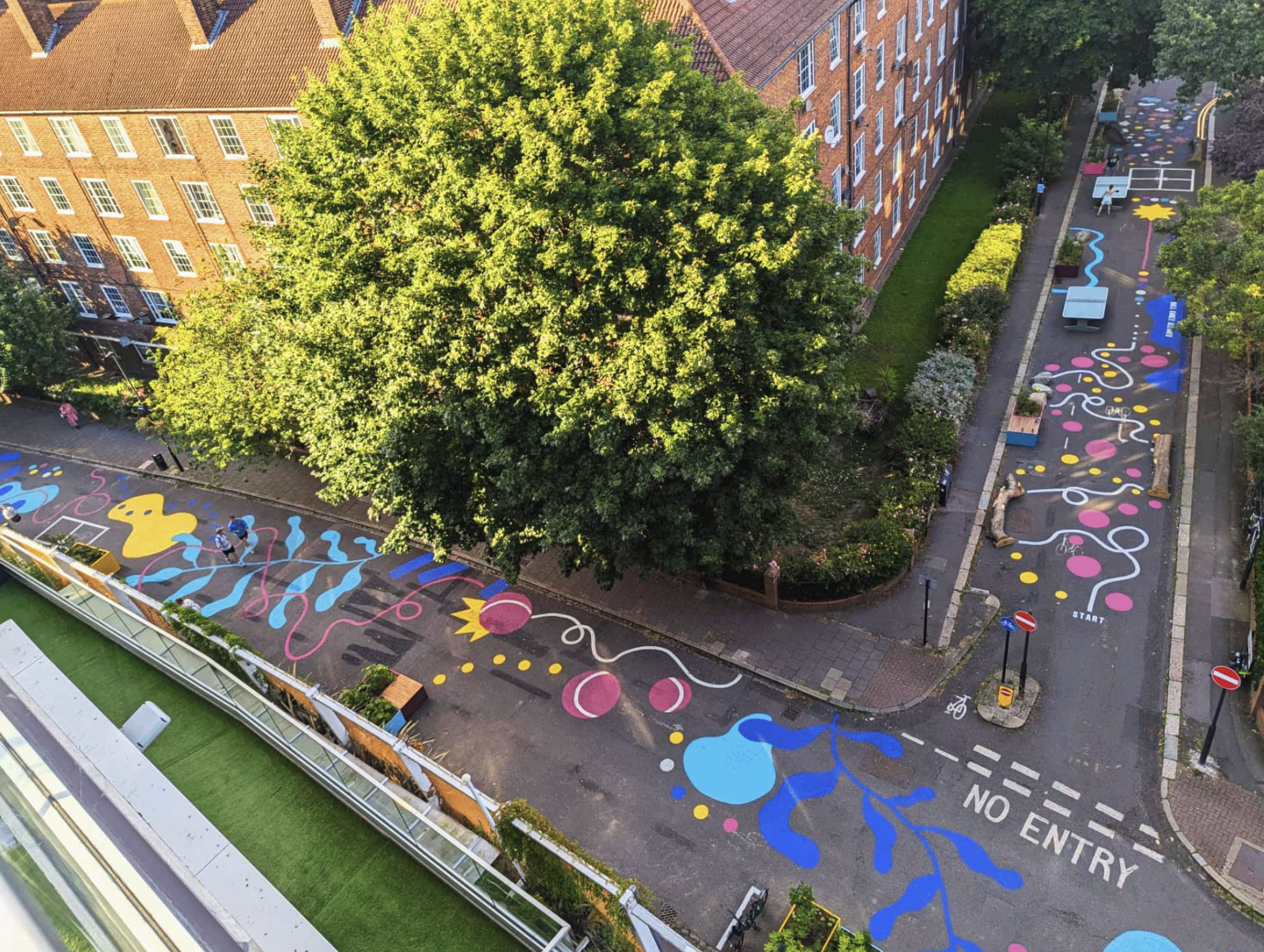
A School Street in Lambeth, designed with Meristem Design, “play on the way” street art by Rosie Foden. Lambeth Council ©
Urban design: London's School Streets & Norway's Heart Zones
London now has over 800 School Streets; temporary road closures around school gates during drop-off and pick-up times, enforced by cameras and community volunteers. There are hundreds more in development as part of ongoing TfL-backed expansion.⁵ Results? Walking and cycling rates increase, air quality improves at the gate, and the streets feel calmer and safer for pedestrians. The intervention is low-cost, reversible, and replicable.
Similarly, Norway has been rolling out Hjertesoner (Heart Zones) across the country: car-free or car-limited areas around school gates designed to make the immediate approaches safer and more welcoming for children on foot or bike. A 2024 national study by the Institute of Transport Economics found that 36% of Norwegian municipalities surveyed have already introduced Heart Zones, with a further 39% considering them.⁶ The effects: 16% of parents at Heart Zone schools report driving less for pick-up and drop-off than before, 14% say their children cycle more, and 10% say their children walk more.
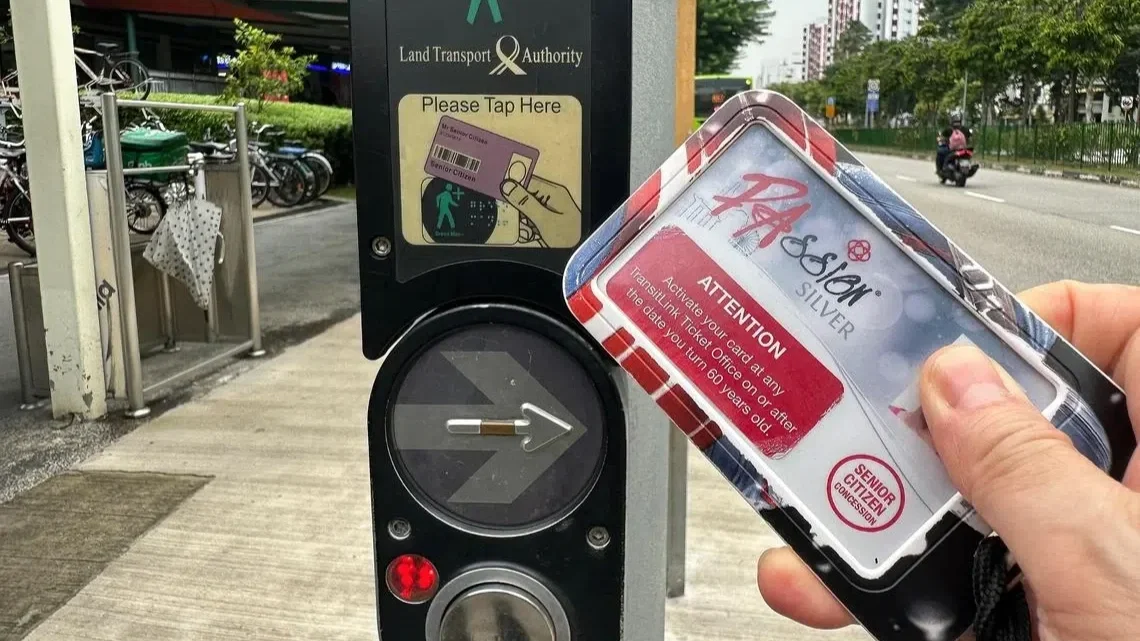
The Green Man+ scheme gives seniors and those with disabilities between three and 13 seconds more to cross the road. It has potential design implications for groups of children as well.
PHOTO: DESMOND WEE. The Straits Times
Interaction design: Singapore's Green Man+
Singapore's Green Man Plus lets senior citizens tap their transit card at a crossing to trigger a longer pedestrian phase, giving a few extra seconds to get across safely. Designed by the Land Transport Authority for older pedestrians, it works just as well for a grandmother walking grandchildren to school, a group of five-year-olds learning to cross independently, or a parent with a pushchair and a reluctant toddler.
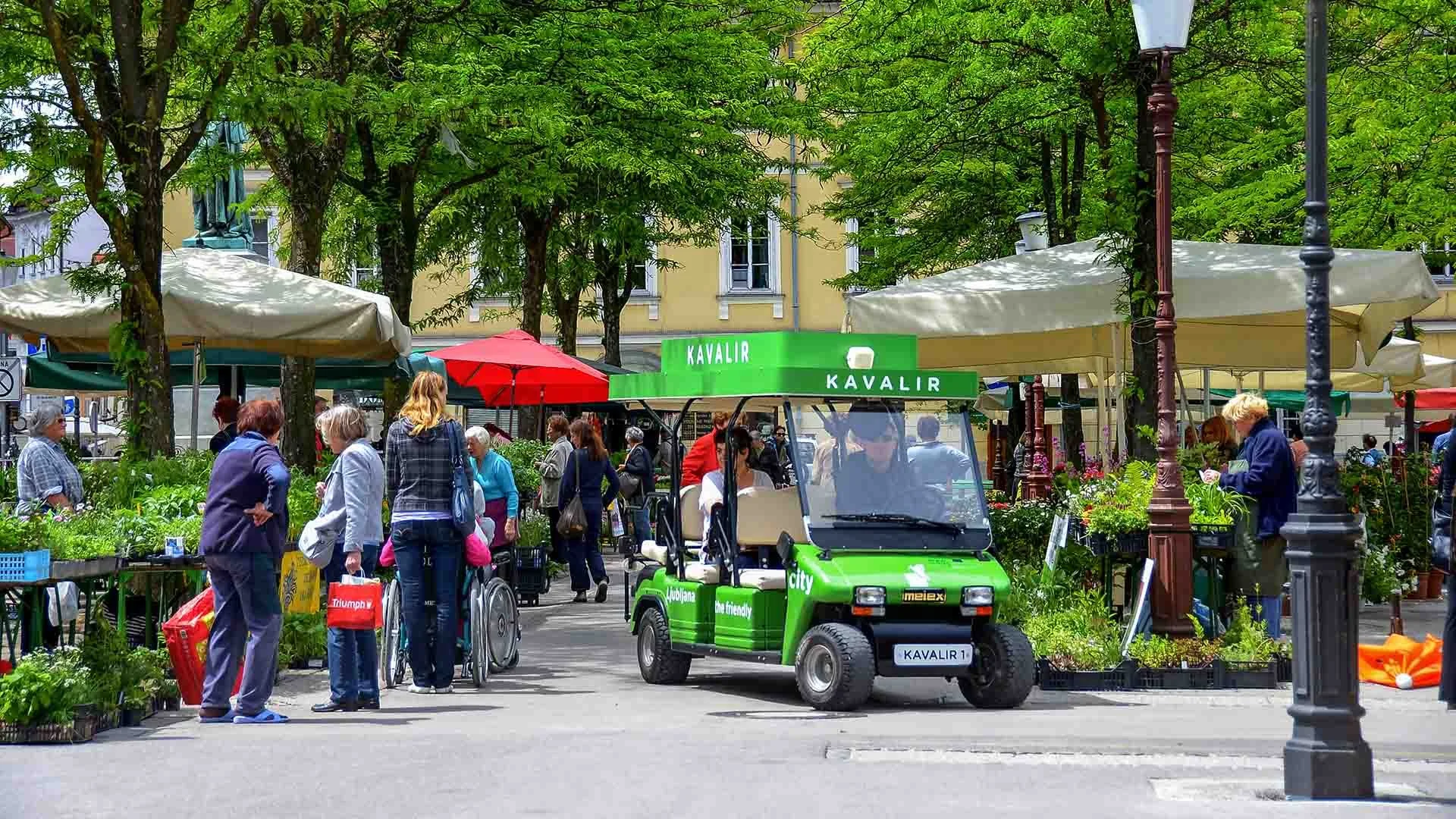
Ljubljana car-free zones. Source.
Urban design: Ljubljana's car-free zones & the “Kavalir”
Perhaps the most radical of the examples, Ljubljana removed cars from its historic centre completely. What started in 2007 with much controversy now has near-universal support. Over 95% of residents oppose bringing cars back. Today the only four-wheeled vehicles in the centre are the electric "Kavalir" shuttles, guided by Vision 2025, a long-term strategy designed around people rather than cars, gradually pedestrianising key spaces while maintaining resident access and regulated deliveries. Ljubljana didn't target the school run specifically, it solved the car problem more broadly, and the school run improved as a consequence.
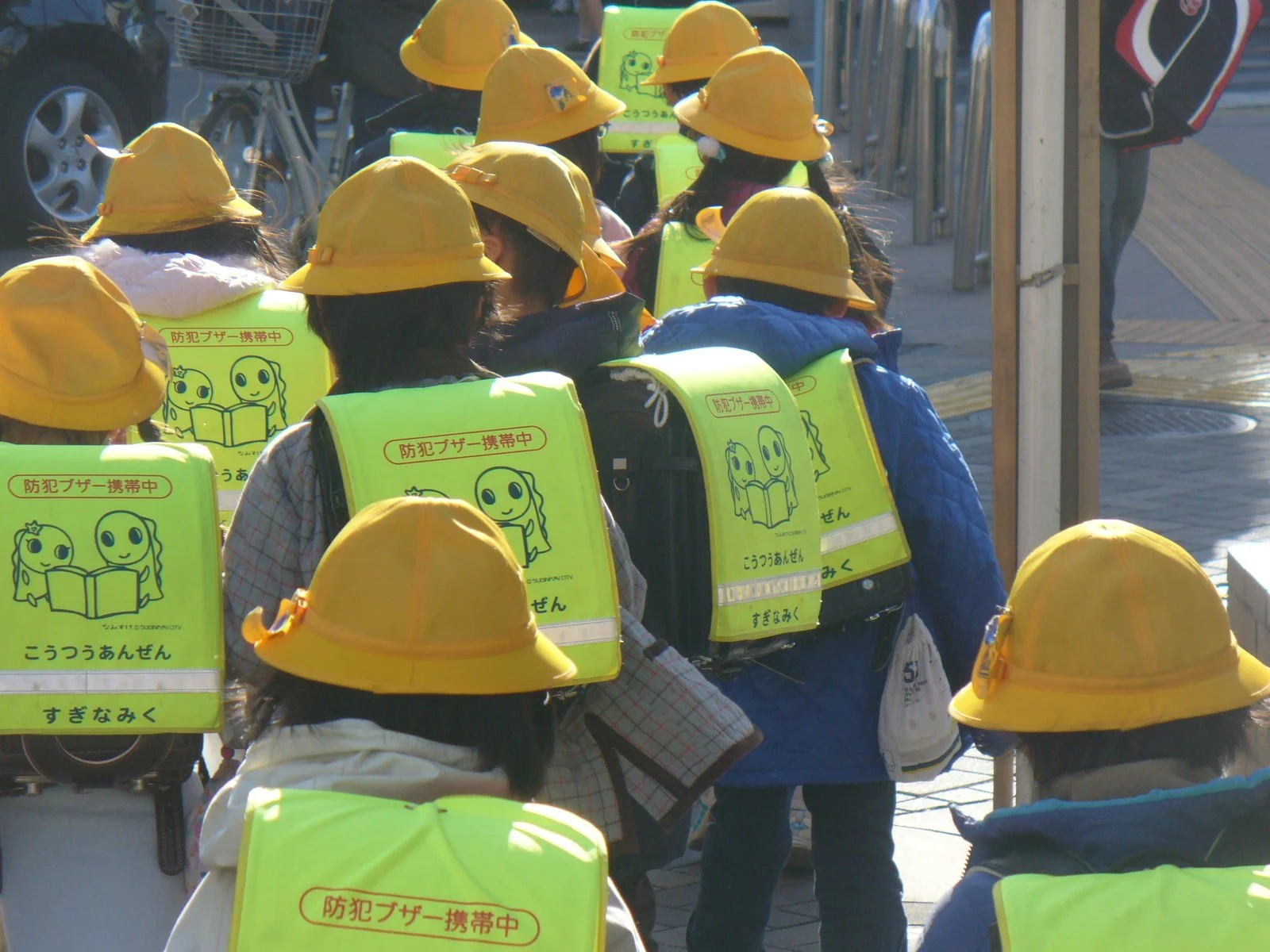
Japan's shudan-toko. Source
Community design: Japan's shudan-toko
In Japan, the shudan-toko, loosely translated as "walking group", has structured the school journey for decades. Children walk in supervised clusters, collecting peers at designated meeting points along the route. The system works because it distributes both responsibility and social infrastructure across the community. Safety is achieved not by removing hazards but by creating visibility and mutual accountability, and it requires almost no capital investment at all.
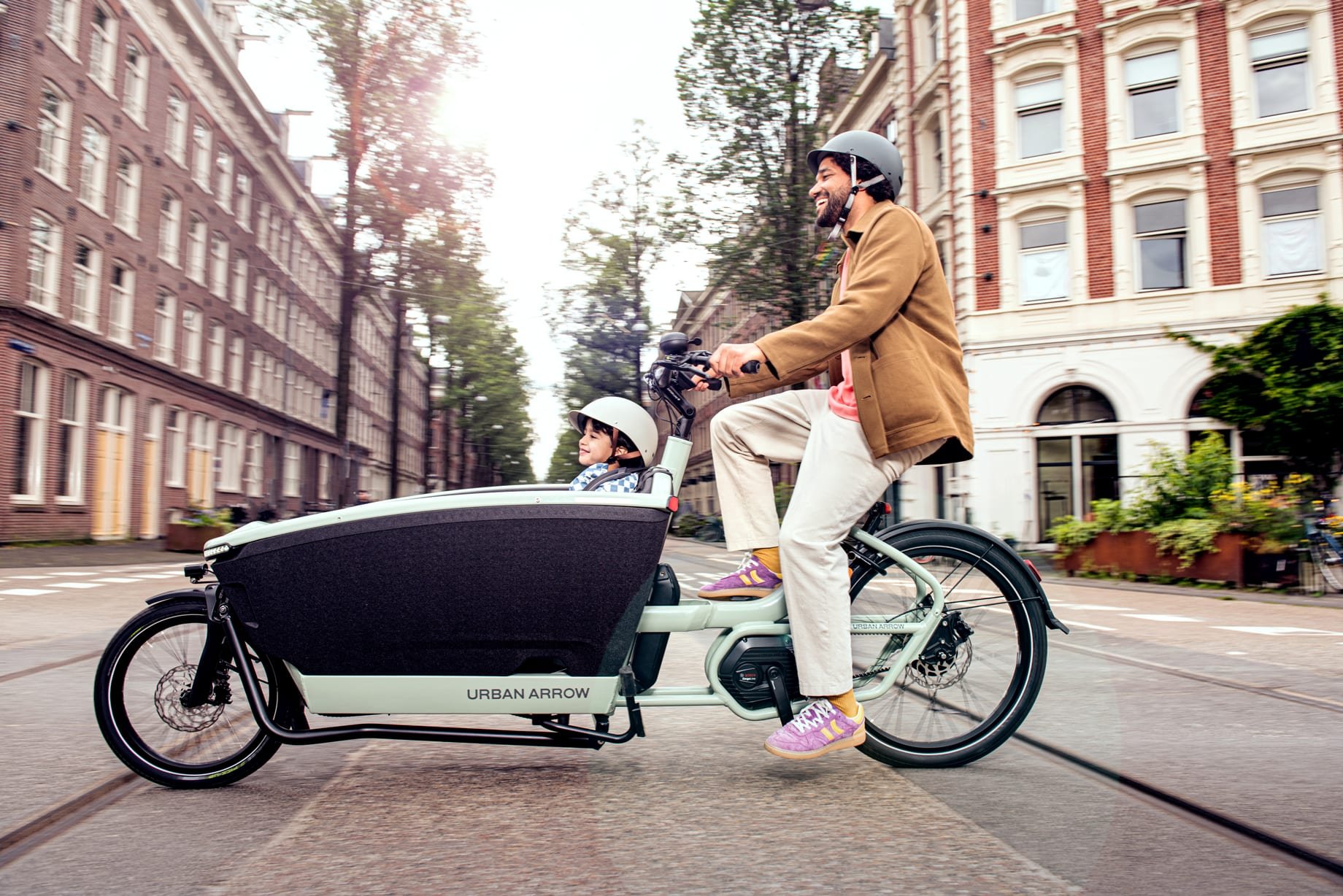
“Meet your next car”. Source: Urban Arrow
Product design: Urban Arrow
The Dutch bakfiets (cargo bike) is so embedded in Dutch culture that it needs no explaining there. Urban Arrow has turned it into a design icon: a purpose-built electric cargo bike capable of effortlessly carrying two children and cargo. In a country where cycling infrastructure has been built deliberately for decades, it has become the dominant school-run vehicle for a generation of urban families. Product design enabled by, and reinforcing, urban design. And the momentum is building. The global cargo bike market has surged to an estimated value of USD 4.42 billion, with family transport, school runs, and urban household use representing a fast-growing consumer segment.⁷
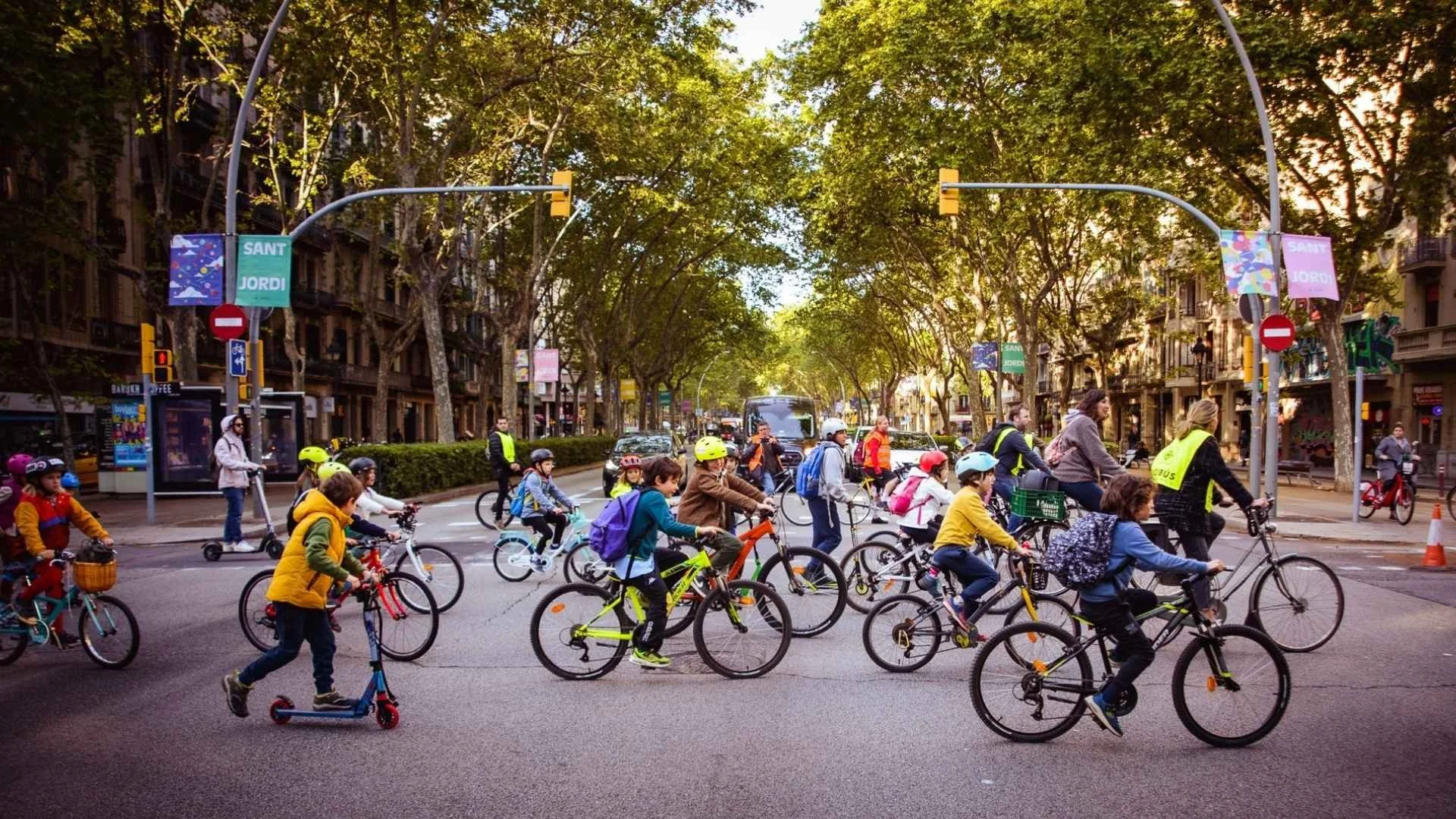
Bici Bus Barcelona. Source
Community design: Bici Bus & Kidical Mass
The Bici Bus takes the logic of the walking bus (children travelling in a supervised group) and puts it on bikes. Originating in Spain and now spreading across Europe, a Bici Bus follows a fixed route, picks up children at stops, and delivers them to school together. It requires almost no infrastructure investment. It requires a few committed adults, a route, and a day of the week.
Similarly, Kidical Mass is a direct adaptation of Critical Mass cycling rides, redesigned specifically for families with children. Groups of parents and kids ride together through city streets on regular routes, turning the school commute into a collective, visible, joyful act. There is safety in numbers. Literally, the group is too large to ignore. It is campaign design and community design at once.
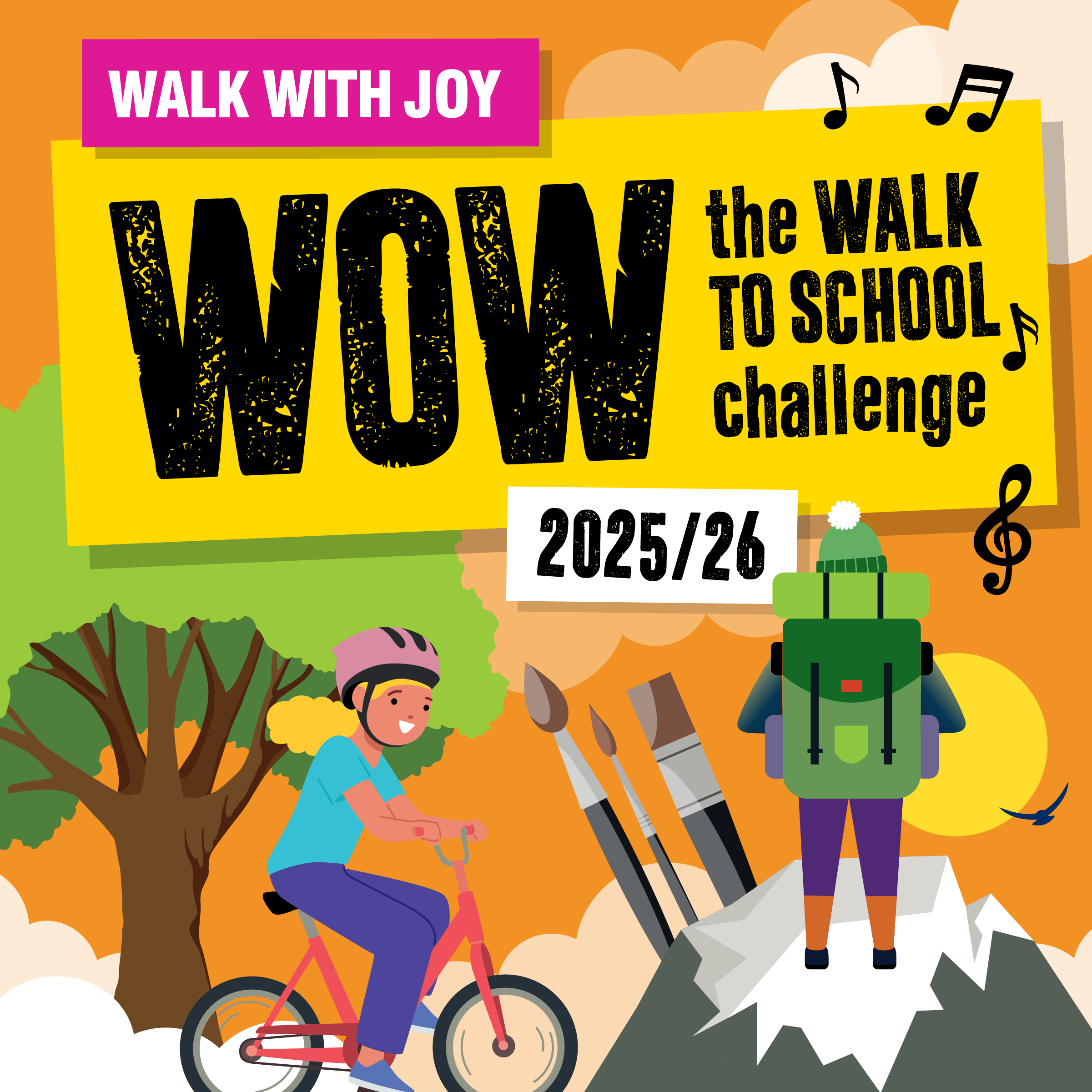
Walk to School Week Campaign by Living Streets UK
Communication design: Living Streets "Walk to School"
Living Streets has run its Walk to School programme in the UK for over twenty years, using behaviour change communications, school engagement, and the annual Walk to School Week to shift both attitudes and habits. The power is not in any single campaign but in the sustained, patient work of normalising active travel as the default.
The Design Brief
This is an exciting moment to be working in this space. The conditions for change are converging. Urban policy is moving in the right direction. A generation of parents raised on cycling culture is now making school-run decisions. The precedent to imagining streets differently, to close a road, to paint a crossing, has never been stronger.
As that momentum builds, demand will follow. For urban designers and planners with the vision to redesign school environments. For product designers who can make active travel feel as frictionless as the car. For social entrepreneurs and community leaders who know how to build the trust, the habit, and the joy that make these programmes sustainable. For parent-owned brands built on a conviction about a different kind of world for their children to grow up in.
The school run is one of the most repeated journeys in a family’s life. Designed well, it can shape how children grow into their neighbourhoods, their independence and the habits they carry into adulthood.
References
Living Streets (2022). The State of Walking 2022. livingstreets.org.uk
McDonald, N.C. (2007). Active transportation to school: Trends among U.S. schoolchildren, 1969–2001. American Journal of Preventive Medicine, 32(6), 509–516. https://doi.org/10.1016/j.amepre.2007.02.022
NHS Digital (2021). Health Survey for England 2019: Physical Activity in Children. digital.nhs.uk
Department for Transport (2019). National Travel Survey: Travel by Purpose. gov.uk/government/statistics/national-travel-survey-2019
Transport for London (2024). School Streets Programme. tfl.gov.uk/travel-information/improvements-and-projects/school-streets
Uhlving, V.M., Nenseth, V., Ellis, I.O., Egner, L.E., & Nævestad, T-O. (2024). Knowledge based on the effects of Heart Zone. TØI Report 2014/2024. Institute of Transport Economics, Oslo. toi.no
Global Market Insights Inc. (2026). Cargo Bike Market Size & Share 2026–2035. gminsights.com/industry-analysis/cargo-bike-market


